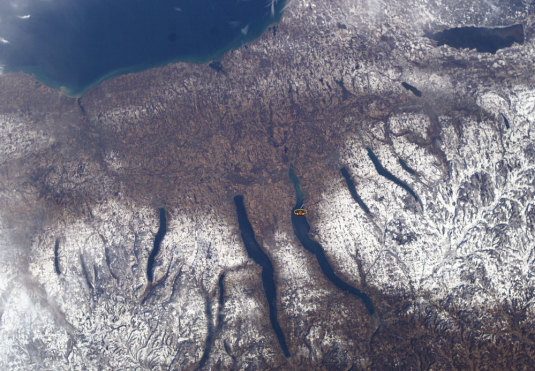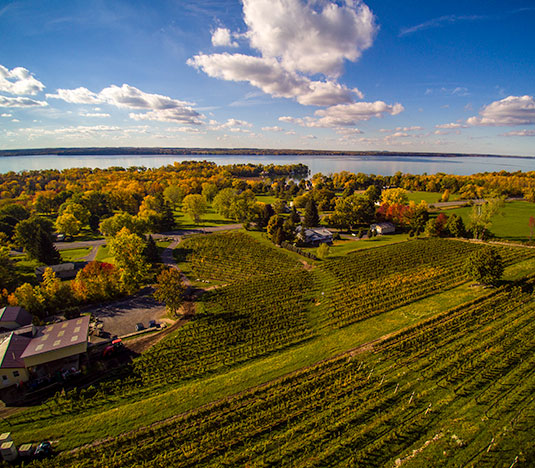



The Finger Lakes were formed by glacial activity during the Pleistocene Epoch or Ice Age. Around 2 million years ago, the first of many glaciers of the Laurentide Ice Sheet moved southward from the Hudson Bay, widening and deepening existing river valleys. When the last glacier retreated from the region about 10,000 years ago, glacial melt water filled the Finger Lakes – leaving us with eleven pristine bodies of fresh water. Over the next 10,000 years, rivers and streams surrounding the lakes continued to flow, cutting through soil and shale, and forming the gorges, gullies and waterfalls that make our region so stunningly beautiful.
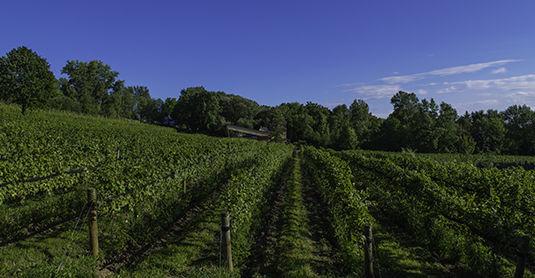
The topography of the land and the lakes themselves are a gift to today’s winemakers, as they safeguard the vines against extreme temperatures. During winter, the larger lakes remain unfrozen, and this retained warmth protects tender buds from severe temperatures. During spring and fall, air drainage on vineyard slopes and the warmth of the lakes reduce the risk of frost damage.